
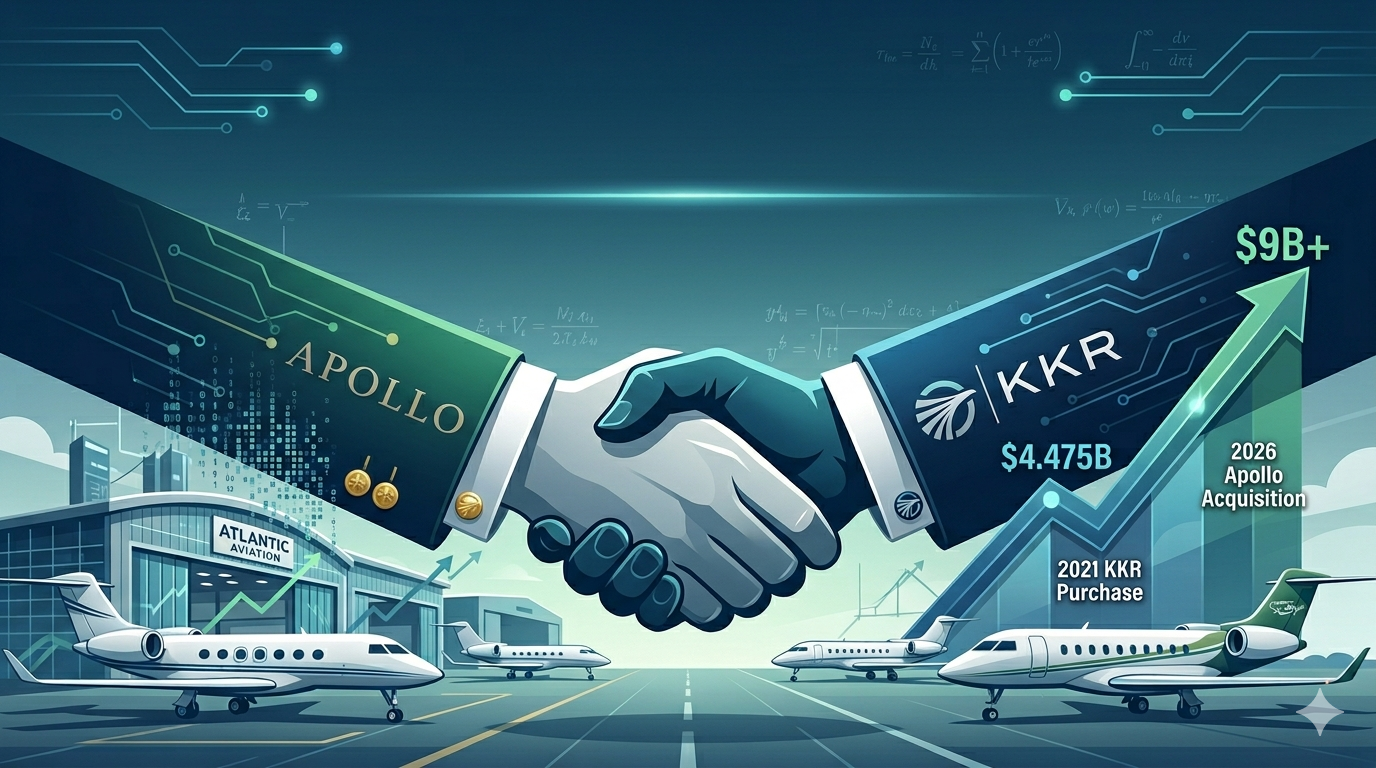
The news breaking this week that Apollo Global Management is nearing a deal to acquire Atlantic Aviation from KKR is more than just a headline for the finance pages. For those of us in the trenches of Fixed Base Operations, it is a massive signal of where our industry is headed—and a reminder of the “valuation trap” many independent and mid-size operators currently face.
Reports suggest the price tag could be more than double the $4.475 billion KKR paid just five years ago. Think about that: in a half-decade defined by global volatility, the value of a premier FBO network has effectively doubled.
As a General Manager, you might feel insulated from these “mega-chain” maneuvers, but the ripple effects will reach your hangar doors sooner than you think. Here is the strategic breakdown of what this means for your operation and how you should position your brand in this “new era” of FBO ownership.
1. Real Estate is the New Fuel
The valuation of Atlantic isn’t just about Jet-A margins; it’s about infrastructure. Apollo isn’t just buying a service business; they are buying a monopoly on “industrial real estate with a runway.”
The Strategy: If you are an independent GM, your greatest asset isn’t your fuel truck—it’s your ramp and hangar space. As private equity continues to roll up the market, the scarcity of prime hangar space at Tier-1 and Tier-2 airports will drive your valuation. Ensure your long-term lease agreements are airtight and your facility master plan is optimized for the next generation of ultra-long-range jets.
2. The “Institutionalization” of Hospitality
When firms like Apollo and GIC (Singapore’s sovereign wealth fund) step in, they bring a data-driven, hyper-standardized approach to the customer experience. They will use their massive capital to invest in “smart” hangars, sustainable aviation fuel (SAF) infrastructure, and high-end terminal aesthetics that mimic luxury hotel brands.
The Strategy: You cannot outspend Apollo, but you can out-maneuver them on “Hyper-Local Hospitality.” Mega-chains often struggle with the “soul” of an FBO. Your competitive advantage is the 15-year relationship your CSRs have with local flight departments. Double down on personalized service that a standardized corporate manual can’t replicate.
3. Pricing Pressure and Margin Management
A $9 billion valuation carries a heavy debt-service load. To justify this price, the new owners will be looking for every cent of EBITDA. Expect to see Atlantic (and subsequently Signature) continue to push the envelope on handling fees, infrastructure fees, and fuel markups.
The Strategy: This creates a “price umbrella” for you. As the mega-chains raise the ceiling on what it costs to land, you have a strategic choice: follow suit to increase your margins, or position yourself as the “high-value alternative” to attract price-sensitive Part 91 and Part 135 operators who are tired of being “nickeled and dimed” by the big chains.
4. The Talent War Will Intensify
With big ownership changes often comes corporate restructuring. Apollo will be looking for efficiency. At the same time, they will be headhunting the best GMs in the business to run their premier hubs.
The Strategy: Protect your team. Your line techs and CSRs are your brand. In a world of revolving-door ownership, stability is a marketing asset. Ensure your culture is strong enough to resist the poaching that inevitably follows these massive acquisitions.
The Bottom Line
The Atlantic sale proves that the FBO industry is no longer the “sleepy corner” of aviation. It is a high-stakes, high-valuation asset class. Whether you are looking to sell in the next three years or stay independent for the next thirty, you must run your FBO with the same financial rigor and brand clarity as the giants.
The “big guys” are getting bigger and more expensive. That leaves a massive opening for the agile, service-oriented GM to win the hearts (and tail numbers) of the flying public.
Keep your eyes on the horizon and your feet on the ramp.