
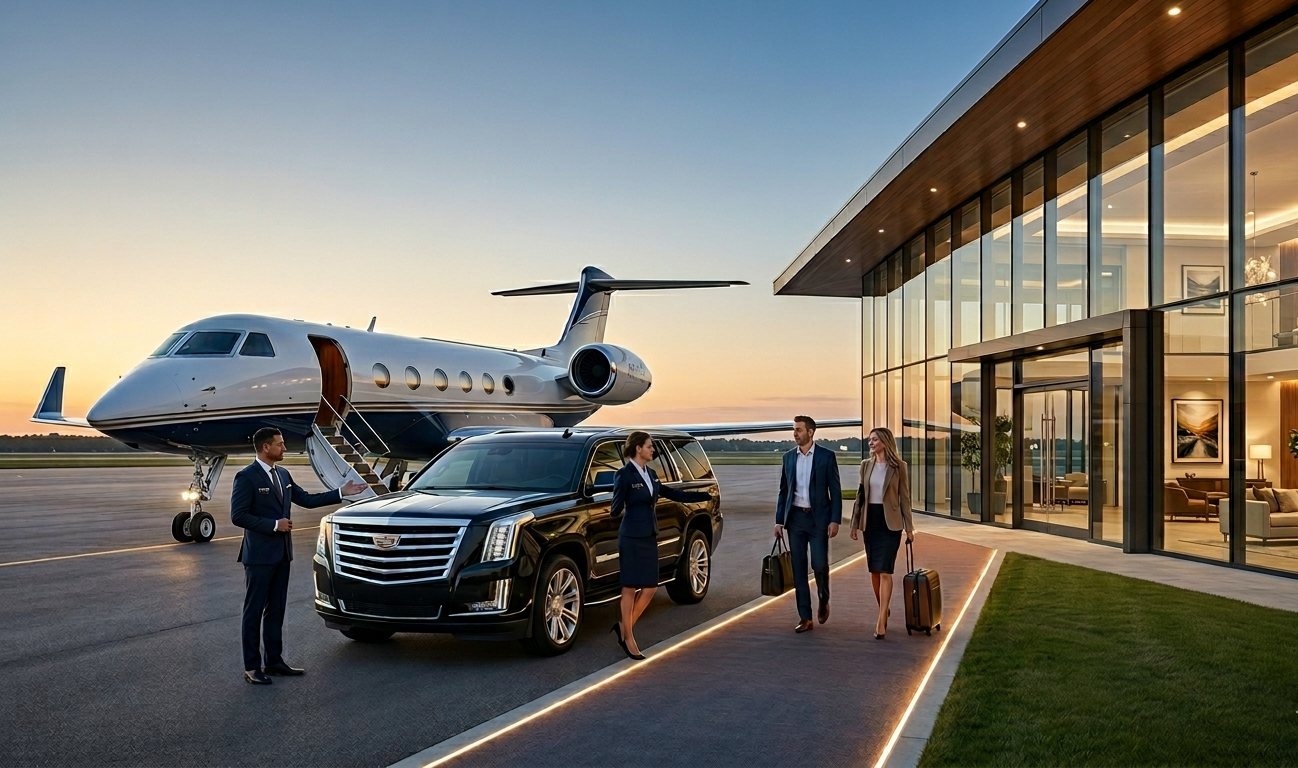
The recent Robb Report feature, “How Private Aviation’s FBOs Are Elevating Their Presence,” isn’t just a puff piece about fancy lounges—it’s a wake-up call for every FBO General Manager in the industry.
The article highlights a seismic shift: the world’s elite travelers no longer view an FBO as a functional pitstop. They view it as the “first and last mile” of their journey. As a marketer and strategist in this space, I see a clear message between the lines: If you are only selling fuel and hangar space, you are becoming a commodity. To survive, you must sell an experience.
Here is how GMs should be translating these high-level trends into actionable strategies to stay competitive.
1. The “Amenity Arms Race” is Real (But It’s Not Just About Marble)
The Robb Report highlights massive investments from players like Sheltair and Jet Aviation in ultra-luxe terminals. However, you don’t need a $20 million renovation to compete.
The Strategy: Focus on sensory branding. Luxury is often found in the details that humanize the terminal.
- Action: Audit your “scent and sound.” Does your lobby smell like jet fuel and old coffee, or a signature white-tea blend? Is the background music a generic radio station or a curated, low-tempo playlist?
- Action: Upgrade the “hidden” touchpoints. High-end toiletries in the restrooms and premium local coffee blends matter more to a pilot or passenger than a gold-plated chandelier.
2. Frictionless Logistics: The Ultimate Luxury
The article notes that speed and privacy are the primary drivers for private flyers. The FBOs winning the market are those that remove “points of friction.”
The Strategy: Become an extension of the passenger’s personal assistant.
- Action: Implement “Ramp-to-Car” precision. If the passenger’s black car isn’t idling on the tarmac the second the stairs drop, you’ve failed the luxury test.
- Action: Digital Pre-Clearance. Work on tech solutions that allow crew and passengers to handle paperwork, catering orders, and fuel releases via a streamlined mobile interface before they even land.
3. The Pilot is Your Silent Partner
While the Robb Report focuses on the passenger, GMs know that pilots choose where to fuel. A passenger might want a spa, but a pilot wants a nap, a clean shower, and a high-speed workspace.
The Strategy: Treat the crew like the VIPs they are.
- Action: Revitalize the Pilot Lounge. Move beyond the “vending machine and recliner” setup. Offer quiet rooms with actual beds, high-end workstations with multiple monitors, and healthy meal options (not just snacks).
- Action: Loyalty isn’t just about points; it’s about recognition. If your staff knows a recurring captain’s name and their preferred fuel additive, you’ve secured that tail number for life.
4. Localize the Experience
One of the most profound trends mentioned is the integration of local culture. An FBO in Aspen should feel vastly different from one in Miami.
The Strategy: Don’t be a generic franchise. Be a gateway to your city.
- Action: Partner with local high-end brands. Host a “pop-up” gallery for a local artist in your lobby or partner with the city’s top farm-to-table restaurant to provide exclusive in-flight catering menus.
- Action: Curated Concierge. Your front-desk staff should be able to land a table at the “impossible-to-get-into” restaurant or secure a last-minute luxury rental car that isn’t on the standard menu.
5. Sustainability is No Longer Optional
The Robb Report touches on the industry’s shift toward green initiatives. This isn’t just PR; it’s a requirement for the next generation of flyers (and their corporate flight departments).
The Strategy: Lean into SAF (Sustainable Aviation Fuel) and carbon offsets.
- Action: Even if your SAF supply is limited, be vocal about your roadmap to carbon neutrality. Install EV charging stations for ground transport and eliminate single-use plastics in your catering.
The Bottom Line
As the Robb Report correctly identifies, the FBO of the future is a “destination in its own right.”
For General Managers, the goal is simple: Increase the “Stickiness” of your facility. When the flight is over, you want the passenger to think, “That was the easiest part of my day,” and the pilot to think, “I can’t wait to get back to that base.”
Luxury isn’t just what you see; it’s how you feel. Start managing the feeling, and the fuel sales will follow.